I think Jasper Johal and Justin Davis (XI) worked wonderful in Short Cut To Nirvana. The great supporting cast includes Jasper Johal, Justin Davis (XI), Swami Krishnanad, Pilot Baba, Yog Mata.
Click Here To Download Short Cut To Nirvana Online!
I left some information, immages, and video previews of Short Cut To Nirvana below.
Summary of Short Cut To Nirvana:
This enthralling documentary treks to the heart of the largest gathering of humanity on Earth: the Kumbh Mela. The huge festival has been held in India every 12 years for over two millennia, but is little known in the West until now. The film spectacularly captures the sheer spiritual bliss, eternal wisdom and candid joy that envelop both the festival's pilgrims and world-renowned gurus in attendance. SHORTCUT TO NIRVANA also features a special appearance by His Holiness the Dalai Lama.
Click on images below to see Short Cut To Nirvana online :
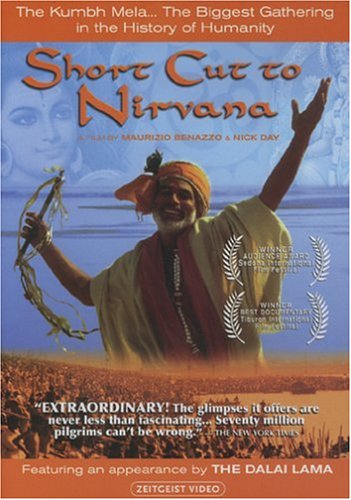
Watch Short Cut To Nirvana online by clicking here!
Short Cut To Nirvana Trailer:
You can get Short Cut To Nirvana at www.Amazon.com as well.
Tamrac 5684 Digital Zoom 4 Camera Bag
¶ 7:00 PM 0 comments

I think Bette Davis and Anne Baxter worked wonderful in Studio Classics - Best Picture Collection. The great supporting cast includes Bette Davis, Anne Baxter, George Sanders, Celeste Holm, Gary Merrill.
All in all, I would rate this movie an 8.5/10. I would definitely watch this movie again.
Click Here To Download Studio Classics - Best Picture Collection Online!
I left some information, immages, and video previews of Studio Classics - Best Picture Collection below.
Summary of Studio Classics - Best Picture Collection:
Sunrise (1927)
There are those who rate Sunrise the greatest of all silent films. Then again, some consider it the finest film from any era. Such claims invite a backlash, but do yourself a favor and give it a look. At the very least, you'll know you've seen a movie of extraordinary visual beauty and emotional purity. This universal tale of a farm couple's journey from country to city and back again was the first American film for F.W. Murnau, the German director of Nosferatu and The Last Laugh whose everyday scenes seemed haunted by phantoms and whose most extravagant visions never lost touch with reality. Hollywood afforded him the technical resources to unleash his imagination, and in turn he opened up the power of camera movement and composition for a generation of American filmmakers. You'll never forget the walk in the swamp, the ripples on the lake, the trolley ride from forest to metropolis. This movie defines the cinema. --Richard T. Jameson
How Green Was My Valley (1941)
John Ford's beautiful, heartfelt drama about a close-knit family of Welsh coal miners is one of the greatest films of Hollywood's golden age--a gentle masterpiece that beat Citizen Kane in the Best Picture race for the 1941 Academy Awards. The picture also won Oscars for Best Director (Ford), Best Supporting Actor (Donald Crisp), Best Art Direction, and Best Cinematography; all of those awards were richly deserved, even if they came at the expense of Kane and Orson Welles. Based on the novel by Richard Llewellyn, the film focuses its eventful story on 10-year-old Huw (Roddy McDowall), youngest of seven children to Mr. and Mrs. Morgan (Donald Crisp, Sarah Allgood), a hardy couple who've seen the best and worst of times in their South Wales mining town. They're facing one of the worst times as Mr. Morgan refuses to join a miners union whose members have begun a long-term strike. Family tensions grow and Huw must learn many of life's harsher lessons under the tutelage of the local preacher (Walter Pidgeon), who has fallen in love with Huw's sister (Maureen O'Hara). As various crises are confronted and devastating losses endured, How Green Was My Valley unfolds as a rich, moving portrait of family strength and integrity. It's also a nod to a simpler, more innocent time--and to the preciousness of memory and the inevitable passage from youth to adulthood. An all-time classic, not to be missed. --Jeff Shannon
Gentleman's Agreement (1947)
Elia Kazan directed this sometimes powerful study of anti-Semitism in nicer circles, based on Laura Z. Hobson's post-World War II novel. Gregory Peck is a hotshot magazine writer who has been blind to the problem; to ferret it out, he passes himself off as Jewish and watches the WASPs squirm. Seen a half-century later, the attitudes seem quaint and dated: Could it really have been like this? Yet the truth of the story comes through, in the wounded dignity of John Garfield, the upright indignation of Peck, and the hidden ways bigotry and hatred can poison relationships. That's particularly true in the Oscar-winning performance of Celeste Holm, who finds more layers than you'd expect in what seems like a stock character. --Marshall Fine
All About Eve (1950)
Showered with Oscars, this wonderfully bitchy (and witty) comedy written and directed by Joseph L. Mankiewicz concerns an aging theater star (Bette Davis) whose life is being supplanted by a wolf-in-sheep's-clothing ingenue (Anne Baxter) whom she helped. This is a film for a viewer to take in like a box of chocolates, packed with scene-for-scene delights that make the entire story even better than it really is. The film also gives deviously talented actors such as George Sanders and Thelma Ritter a chance to speak dazzling lines; Davis bites into her role and never lets go. A classic from Mankiewicz, a legendary screenwriter and the brilliant director of A Letter to Three Wives, The Barefoot Contessa, and Sleuth. --Tom Keogh
Click on images below to see Studio Classics - Best Picture Collection online :
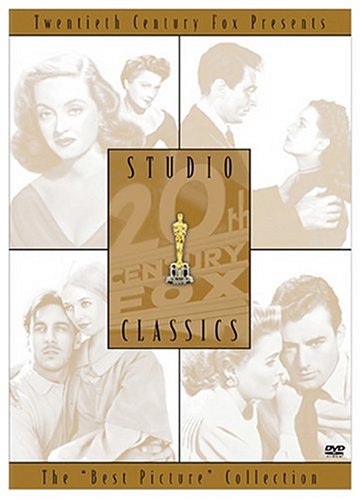
Watch Studio Classics - Best Picture Collection online by clicking here!
Studio Classics - Best Picture Collection Trailer:
You can get Studio Classics - Best Picture Collection at www.Amazon.com as well.
Rent Movie Vocal Selections
¶ 4:13 AM 0 comments
